


Alumni Spotlight
Harry Carney ’27
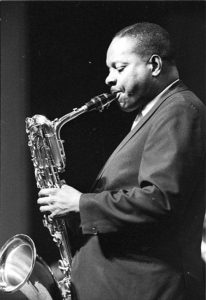
At The English High School of Boston, our motto—“Service to Mankind”—has guided generations of graduates to lives of purpose and impact. Few alumni embody that spirit more powerfully than Harry Carney, Class of 1927, whose music helped define the sound of American jazz and uplift audiences around the world for nearly five decades.
From Jamaica Plain to the Jazz Vanguard
Born in Boston in 1910 and raised in the South End, Harry Carney grew up in a vibrant musical community. Just a few blocks away lived his lifelong friend and fellow jazz great, Johnny Hodges. Both young musicians would go on to shape the sound of the 20th century.
At English High School, Carney was an active member of the school band. He was a classmate of Lawrence Berk, also Class of 1927 and later the founder of what would become Berklee College of Music. Anecdotes suggest Carney and Berk played together in the school band—an extraordinary pairing of future jazz legends developing their craft in the halls of English.
Carney’s musical gifts were evident early. He mastered the baritone saxophone—an instrument that would become his signature—and developed a rich, resonant tone that would influence generations of saxophonists.
A Historic Partnership with Duke Ellington
In 1927, before graduating, Carney made a life-changing decision: he joined the orchestra of Duke Ellington. What followed was one of the most remarkable partnerships in music history. Carney remained with Ellington’s orchestra until Ellington’s death in 1974—a tenure of nearly 47 years. It is widely recognized as the longest continuous collaboration of two musicians in the same ensemble in the history of jazz.
Within Ellington’s orchestra, Carney was far more than a sideman. His deep baritone sax anchored the band’s sound. Ellington composed pieces specifically to feature Carney’s distinctive tone. He also doubled on bass clarinet and clarinet, adding depth and color to the orchestra’s rich textures.
Through the Harlem Renaissance, the Swing Era, World War II, and the Civil Rights Movement, Carney’s music traveled the globe. He performed in concert halls, clubs, and on international tours, serving as a cultural ambassador for American music.
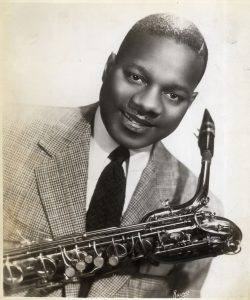
Getty Images- “Harry Carney Featured with Duke Ellington And His Orchestra.”
Service to Mankind—Through Art
How does a jazz musician fulfill the motto “Service to Mankind”?
Harry Carney did so by elevating spirits, breaking racial barriers, and representing Boston—and English High School—on the world stage. Jazz was more than entertainment; it was a powerful expression of creativity, resilience, and cultural dialogue. In an era of profound social change, Carney’s artistry contributed to a shared American cultural identity.
His lifelong loyalty—to his bandmates, to Ellington, and to the music—speaks to values cultivated at English: dedication, excellence, and service beyond self.
A Legacy Rooted in English High
Carney’s story reminds us that service can take many forms. Some alumni serve in medicine, law, public service, or education. Others, like Harry Carney, serve through the arts—by inspiring generations and shaping culture itself.
As we reflect on the lives of our distinguished graduates, Harry Carney stands as a shining example of what it means to live out the mission of English High School. From the school band to the world’s great stages, his journey affirms that talent nurtured in Jamaica Plain can resonate across continents.
His music lives on. His legacy endures. And his life remains a testament to Service to Mankind—in every note he played.
”
